| RYAN WIEBER VS. MICHAEL "DORKMAN" SCOTT What began as a friendly rivalry between two effects artists explodes off TheForce.Net's FanFilms Forum and into the real world in a lightsaber battle royale. Originally created for the forum's lightsaber choreography competition, this fight to the death will decide once and for all who is truly most skilled with a saber. There can be only one. See the 5 minute epic for yourself. | |
Wednesday, August 02, 2006
Ryan vs Dorkman


Tuesday, August 01, 2006
All Celebs Should Be This Cool
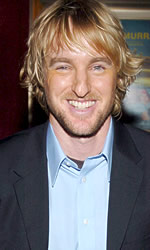
In a letter on their website, rock group Steely Dan accused actor Owen Wilson of stealing the idea for his recent bomb "You, Me and Dupree" from their Grammy-award winning song "Cousin Dupree." They cite a couple of similarities and then ask him for an apology.
In the coolest response ever, Owen responded with this press release:
"I have never heard the song 'Cousin Dupree' and I don't even know who this gentleman, Mr. Steely Dan, is. I hope this helps to clear things up and I can get back to concentrating on my new movie, 'HEY 19.' "
"Hey Nineteen" was a hit off Steely Dan's 1980 album Gaucho. And Steely Dan is a group, not a person.
Friday, July 28, 2006
A Zero-Sum Wage
Recently, the Chicago City Council singled out "big box" stores for a special minimum wage: $10.00 an hour, with another $3.00 per hour in benefits. Applying only to companies with stores of at least 90,000 square feet and with more than $1 billion in annual sales, the Chicago City Council ruling effectively shuts out Wal-Mart from within Chicago city limits.
Wal-Mart has historically displayed a willingness to fight. I don’t see a situation where Wal-Mart will quietly acquiesce, paying union-level wages for what is essentially low-skilled labor. The unfortunate thing is that Chicagoans will be the ones to suffer:
1) Wal-Mart will more than likely locate near, but outside, the Chicago city limits; therefore, the city will miss out on any tax revenues from the store.
2) Chicagoans who wish to shop at Wal-Mart will have to travel farther to do so. With lower-priced goods available, many working-class families depend on retailers such as Wal-Mart for school supplies, clothing, and other essentials.
3) Chicagoans who might have worked for Wal-Mart if it were closer will not be able to, unless they want to travel. Many people who would have been earning Wal-Mart’s "low" wages and benefits will now have to do without completely.
What did the Chicago City Council gain? A feeling of "doing something good" for those they consider less fortunate?
This strikes me as one of the worst features of being a Liberal in America today. If you feel good, then it doesn’t really matter who else has to pay for that feeling, or how much they have to pay.
A phrase I read recently in a paper by the Texas Public Policy Foundation struck a chord: ".…Everything a government does is funded by denying property and wealth to private individuals…."
When the government - federal, state, county or city - provides money, goods or services to individual citizens, then other citizens are being deprived of money, goods or services. While the larger economy in a capitalist society is not a zero-sum game (wealth can be created), government spending is zero-sum - if you win, I lose, because the government does not create wealth, it can only redistribute it.
That’s one reason that the Social Security problem must be resolved by turning to the private sector. Only the market can create enough wealth to cover the needs of future Social Security recipients. If we stay in a government-controlled system, it will collapse under its own weight, as fewer earners support more and more recipients.
Business is the same way. If the government forces a company to pay a higher wage to lower-skilled workers, the company has few choices, none of them good:
1) Accept lower profits (unfair to owners and stockholders);
2) Raise prices (unfair to customers);
3) Hire fewer workers to do the same amount of work (unfair to the workers); or
4) Close the doors (unfair to stockholders, customers and workers.)
The choices are restricted because the government can’t legislate increased business for the company to offset the higher expense. Again, with the government involved, the game becomes zero-sum.
This comes from Dr. Thomas Sowell, a PhD in economics and senior fellow at the Hoover institute.
According to the Census Bureau's 2006 Statistical Abstract, there are more than three times as many workers below the minimum wage as are at the minimum wage. Many businesses do not meet the requirements that would force them to pay the federal minimum wage.
Unless the government adds stipulations (e.g., stores with at least 90,000 square feet, businesses open on Sundays, businesses that have the letter "R" in their name), most workers won’t benefit at all from an increase in the minimum wage, and many will suffer. Meanwhile, businesses will be forced into the undesirable choices listed above.
The French phrase laissez-faire -- loosely translated as "hands off" -- historically is used in economics as a warning for the government not to interfere with trade.
The government should, in this case, keep its hands off the wages a company pays its employees.
Wal-Mart has historically displayed a willingness to fight. I don’t see a situation where Wal-Mart will quietly acquiesce, paying union-level wages for what is essentially low-skilled labor. The unfortunate thing is that Chicagoans will be the ones to suffer:
1) Wal-Mart will more than likely locate near, but outside, the Chicago city limits; therefore, the city will miss out on any tax revenues from the store.
2) Chicagoans who wish to shop at Wal-Mart will have to travel farther to do so. With lower-priced goods available, many working-class families depend on retailers such as Wal-Mart for school supplies, clothing, and other essentials.
3) Chicagoans who might have worked for Wal-Mart if it were closer will not be able to, unless they want to travel. Many people who would have been earning Wal-Mart’s "low" wages and benefits will now have to do without completely.
What did the Chicago City Council gain? A feeling of "doing something good" for those they consider less fortunate?
This strikes me as one of the worst features of being a Liberal in America today. If you feel good, then it doesn’t really matter who else has to pay for that feeling, or how much they have to pay.
A phrase I read recently in a paper by the Texas Public Policy Foundation struck a chord: ".…Everything a government does is funded by denying property and wealth to private individuals…."
When the government - federal, state, county or city - provides money, goods or services to individual citizens, then other citizens are being deprived of money, goods or services. While the larger economy in a capitalist society is not a zero-sum game (wealth can be created), government spending is zero-sum - if you win, I lose, because the government does not create wealth, it can only redistribute it.
That’s one reason that the Social Security problem must be resolved by turning to the private sector. Only the market can create enough wealth to cover the needs of future Social Security recipients. If we stay in a government-controlled system, it will collapse under its own weight, as fewer earners support more and more recipients.
Business is the same way. If the government forces a company to pay a higher wage to lower-skilled workers, the company has few choices, none of them good:
1) Accept lower profits (unfair to owners and stockholders);
2) Raise prices (unfair to customers);
3) Hire fewer workers to do the same amount of work (unfair to the workers); or
4) Close the doors (unfair to stockholders, customers and workers.)
The choices are restricted because the government can’t legislate increased business for the company to offset the higher expense. Again, with the government involved, the game becomes zero-sum.
"Artificial minimum wages create unemployment, mainly among lower-skilled workers, younger and inexperienced workers, and workers from minority groups….This should not be surprising. Making anything more expensive almost invariably leads to fewer purchases. This includes labor."
This comes from Dr. Thomas Sowell, a PhD in economics and senior fellow at the Hoover institute.
According to the Census Bureau's 2006 Statistical Abstract, there are more than three times as many workers below the minimum wage as are at the minimum wage. Many businesses do not meet the requirements that would force them to pay the federal minimum wage.
Unless the government adds stipulations (e.g., stores with at least 90,000 square feet, businesses open on Sundays, businesses that have the letter "R" in their name), most workers won’t benefit at all from an increase in the minimum wage, and many will suffer. Meanwhile, businesses will be forced into the undesirable choices listed above.
The French phrase laissez-faire -- loosely translated as "hands off" -- historically is used in economics as a warning for the government not to interfere with trade.
The government should, in this case, keep its hands off the wages a company pays its employees.
Monday, July 17, 2006
Optical Illusion? Or Optical Deception?
Here is a great website for Optical Illusion or exercises in visual perception. Choose which picture you want to try.
Monday, July 10, 2006
Gerrymandering Texas
There is a clear and concise explanation by Gina Parker (People Win in Texas Case) of the situation regarding the recent US Supreme Court decision on the gerrymandering of Texas voting districts to favor Republicans.
Since Texas politicians manage to mangle, confuse and complicate nearly everything they touch (see School Finance), it's nice to see the issue spelled out simply.
Since Texas politicians manage to mangle, confuse and complicate nearly everything they touch (see School Finance), it's nice to see the issue spelled out simply.
Monday, June 26, 2006
The United Nations View on the 2nd Amendment

A statue in front of the United Nations building in New York City.
Any questions?
Sunday, June 25, 2006
Framing the Argument
One trick often used in debate is "framing the argument." To frame the argument is to take a position that assumes certain facts, then building on those. The old trick question of "How long has it been since you quit beating your wife?" fits into this category.
Many times when I’m arguing a point with someone, they will use this tactic, and when I challenge the basic assumption, they act outraged, resorting to epithets, comments on my intelligence, etc. I’m a chessplayer, however; I understand that my position, whether in a game of chess or a debate with a political foe, must be as strong as possible if I am to win.
Which brings me to global warming - or more precisely, climate changes caused by mankind that carry negative consequences. (When I use the term "global warming" from here on out, this is the definition I mean.)
In his movie "An Inconvenient Truth," Al Gore says (or so it has been reported; I haven’t seen the movie, and don’t think I will.) that "the debate in the scientific community is over."
Not true. As former Senator Daniel Patrick Moynihan once said, "Everyone is entitled to his own opinion, but not his own facts."
A key point to remember, regardless of what you hear or read: Global warming is a theory, not a fact, and it has been disputed by many, many qualified scientists. One example is a petition organized by Frederick Seitz (http://www.oism.org/pproject/)
Global warming alarmists want to start the debate just after the "no longer a debate" comment. I move the debate back one step - and make them admit that their whole stance is based on a disputed theory.
The proponents of "global warming" insist on tighter governmental controls on even more aspects of our lives. I oppose this. Contrary to what has been suggested, this does not mean that I’m for dirty air, dirty water, or that I want to kill the planet.
However, what is happening is that someone else’s eccentricities are being forced on me, in the name of an unproven theory. I reject this outright, and insist that those who would impose themselves into my life provide a more convincing argument.
The environmentalist whackos’ position is hypocritical. They insist on doing away with our use of fossil fuels in favor of so-called "clean" energy, while on the other hand they oppose nuclear energy, a proven clean energy source. How do they reconcile these two opposing stances? Could it be that their goal is not a clean environment after all, but is instead to force me to alter my lifestyle in favor of theirs?
I challenge their basic assumptions, and every point after; however, I’m open-minded, and willing to change my position.
But they better have a good argument.
Many times when I’m arguing a point with someone, they will use this tactic, and when I challenge the basic assumption, they act outraged, resorting to epithets, comments on my intelligence, etc. I’m a chessplayer, however; I understand that my position, whether in a game of chess or a debate with a political foe, must be as strong as possible if I am to win.
Which brings me to global warming - or more precisely, climate changes caused by mankind that carry negative consequences. (When I use the term "global warming" from here on out, this is the definition I mean.)
In his movie "An Inconvenient Truth," Al Gore says (or so it has been reported; I haven’t seen the movie, and don’t think I will.) that "the debate in the scientific community is over."
Not true. As former Senator Daniel Patrick Moynihan once said, "Everyone is entitled to his own opinion, but not his own facts."
A key point to remember, regardless of what you hear or read: Global warming is a theory, not a fact, and it has been disputed by many, many qualified scientists. One example is a petition organized by Frederick Seitz (http://www.oism.org/pproject/)
Global warming alarmists want to start the debate just after the "no longer a debate" comment. I move the debate back one step - and make them admit that their whole stance is based on a disputed theory.
The proponents of "global warming" insist on tighter governmental controls on even more aspects of our lives. I oppose this. Contrary to what has been suggested, this does not mean that I’m for dirty air, dirty water, or that I want to kill the planet.
However, what is happening is that someone else’s eccentricities are being forced on me, in the name of an unproven theory. I reject this outright, and insist that those who would impose themselves into my life provide a more convincing argument.
The environmentalist whackos’ position is hypocritical. They insist on doing away with our use of fossil fuels in favor of so-called "clean" energy, while on the other hand they oppose nuclear energy, a proven clean energy source. How do they reconcile these two opposing stances? Could it be that their goal is not a clean environment after all, but is instead to force me to alter my lifestyle in favor of theirs?
I challenge their basic assumptions, and every point after; however, I’m open-minded, and willing to change my position.
But they better have a good argument.
Wednesday, June 21, 2006
When You Hate Your Own Dog
In the political debates I engage in, I've chosen a side and stay pretty consistent with it. This side normally aligns with the Republican party. But I disagree with President Bush's immigration policy, and the Senate version of an immigration bill.
I just listened to Sean Hannity interview Attorney General Alberto Gonzales, and caught myself screaming at the radio. Here's why:
There are basically three parts to the immigration debate.
1) Securing the borders.
2) Dealing with those illegal immigrants already in the United States.
3) Providing a streamlined way for citizens of other countries to come into the US to work.
There is almost no disagreement between the warring factions about #1 and #3. We all want secure borders, and we all would like to find a simple, legal way for non-citizens to come here. There is some disagreement about #2 -- the "amnesty" question.
Hannity believes, as do I, that each aspect of the question should be considered in separate legislation. Legislation (if needed; I'm not sure we need any more laws than we have already) could be passed tout de suite on those parts that are in agreement.
Attorney General Gonzales, on the other hand, defended the President's plan, which is similar to the Senate plan, saying that "it would be wrong to consider only one point while we let the other points fester." [Paraphrasing mine. - kw] Therefore, according to his argument, we must have the "comprehensive" immigration bill which would encompass all facets of the immigration issue.
So the "comprehensive" bill passed by the Senate collides with the more conservative bill from the House, and nothing gets done because no compromise is possible. I repeat, nothing gets done. (Sidebar: Why do we let Congress vote for their own pay increases?)
The solution is clear, at least to me: Introduce three separate bills simultaneously, each dealing with a single part of the immigration issue. The only delay then would be on the bill over which there might be an honest debate. Meanwhile, the other bills would pass quickly, and the immigration issue could be addressed properly.
I'm not so naive as to imagine that those folks have not thought of the idea. There are obviously other reasons that the politicians on my side of the aisle -- my dogs, so to speak -- don't really want anything to happen on immigration. I wish I knew what those reasons are.
And just like having a mean dog, you want him to win the fights against other mean dogs, but you want to make sure that he doesn't turn around and bite you.
Maybe all politicians should be put on a leash.
I just listened to Sean Hannity interview Attorney General Alberto Gonzales, and caught myself screaming at the radio. Here's why:
There are basically three parts to the immigration debate.
1) Securing the borders.
2) Dealing with those illegal immigrants already in the United States.
3) Providing a streamlined way for citizens of other countries to come into the US to work.
There is almost no disagreement between the warring factions about #1 and #3. We all want secure borders, and we all would like to find a simple, legal way for non-citizens to come here. There is some disagreement about #2 -- the "amnesty" question.
Hannity believes, as do I, that each aspect of the question should be considered in separate legislation. Legislation (if needed; I'm not sure we need any more laws than we have already) could be passed tout de suite on those parts that are in agreement.
Attorney General Gonzales, on the other hand, defended the President's plan, which is similar to the Senate plan, saying that "it would be wrong to consider only one point while we let the other points fester." [Paraphrasing mine. - kw] Therefore, according to his argument, we must have the "comprehensive" immigration bill which would encompass all facets of the immigration issue.
So the "comprehensive" bill passed by the Senate collides with the more conservative bill from the House, and nothing gets done because no compromise is possible. I repeat, nothing gets done. (Sidebar: Why do we let Congress vote for their own pay increases?)
The solution is clear, at least to me: Introduce three separate bills simultaneously, each dealing with a single part of the immigration issue. The only delay then would be on the bill over which there might be an honest debate. Meanwhile, the other bills would pass quickly, and the immigration issue could be addressed properly.
I'm not so naive as to imagine that those folks have not thought of the idea. There are obviously other reasons that the politicians on my side of the aisle -- my dogs, so to speak -- don't really want anything to happen on immigration. I wish I knew what those reasons are.
And just like having a mean dog, you want him to win the fights against other mean dogs, but you want to make sure that he doesn't turn around and bite you.
Maybe all politicians should be put on a leash.
Making Fun of the A-J #1
From the Lubbock Avalanche-Journal:
"Helicopter called to duty on air conditioning units" In related news, a B-52 bomber was called in on an oven, and F16 fighter jets were contacted about installing cable.
"Helicopter called to duty on air conditioning units" In related news, a B-52 bomber was called in on an oven, and F16 fighter jets were contacted about installing cable.
"Lubbock residents get one-on-one with mayor" But they get to bring a friend to see the Chief of Police.
"Florida medical examiner may take post in Lubbock" There's apparently a post shortage in Florida.
"Texas Tech plans crackdown on unauthorized use of school logo" The fad of branding donkeys with the logo is causing confusion among those who use the common phrase "Texas Tech jackass".
"Simple scheme put perpetrators through college" They claimed they were All-American running backs and illegal immigrants.
A Reversal of Fortune in the NBA
While I'm not an NBA fan, I will occasionally look at the headlines during the playoffs to see who won. This year, with the Dallas Mavericks in the Finals, I was a little more interested. I even watched part of a game...the last five minutes of Game 3, where Dallas blew a 13-point lead.
So I went back to just reading the headlines.
Last night Miami won Game 6, giving them the title. There have already been accusations that the Finals were "fixed" by NBA officials (both on and off the court), with proper counter arguments. The conspiracists say that certain larger markets, say Los Angeles, New York (or Miami,) are preferable over smaller markets to be the NBA Champions. This is either for ratings, advertising revenue, merchandise sales, or similar notions, depending on which crackpot theory you want to believe. In this particular case, I think it's reasonable to say that NBA executives really, really don't like Mavericks owner Mark Cuban, who is wealthy enough to say exactly what he thinks -- and he does -- and absorb a $250,000 fine.
I personally believe that there is something to the theory that the NBA chooses a team to win, and officiating plays a huge part in it. In the late 90's the Lakers received a huge number of favorable calls. (I'm not even a fan, but I grit my teeth remembering a Game Six against Portland....the Trailblazers were robbed.)
While I'm not saying this series was fixed, an interesting statistic came up. Look here:
TOTAL FREE THROWS ATTEMPTED FOR THE WHOLE SERIES:
Miami 207, Dallas 155.
Okay, nothing really unusual about that. Miami's Dwayne Wade drives to the basket a lot and draws more fouls, Dallas is a physical team, etc., etc., so Miami's going to get more chances at the free throw line.
But let's look at how it broke down:
FREE THROWS ATTEMPTED BY GAME:
Game 1 Dallas 26, Miami 19
Game 2 Dallas 28, Miami 32
Game 3 Dallas 26, Miami 34
Game 4 Dallas 27, Miami 36
Game 5 Dallas 25, Miami 49
Game 6 Dallas 23, Miami 37
While starting out slow in the first couple of games, Dallas "learned" how to foul in the last four. In the first two games, Miami shot 49% of the free throws. In the last four games, after Dallas took a 2-0 lead in the series, Miami shot 61% of the free throws.
While not excusing the Mavericks's horrendous choke in Game 3, I find it at least curious that there was a reversal of 24% in the allocation of free throws comparing the first two games to the last four. Note that it's not the fact that Dallas might foul more that's curious (see above), but the reversal in such an important statistic.
A suspicious person might say NBA officials panicked after Game 2 and instructed the refs to do something about it. ("Anything to keep Cuban from winning a championship")
I don't think it would be the first time such a thing has happened. But I'm not really a fan, so what do I know?
So I went back to just reading the headlines.
Last night Miami won Game 6, giving them the title. There have already been accusations that the Finals were "fixed" by NBA officials (both on and off the court), with proper counter arguments. The conspiracists say that certain larger markets, say Los Angeles, New York (or Miami,) are preferable over smaller markets to be the NBA Champions. This is either for ratings, advertising revenue, merchandise sales, or similar notions, depending on which crackpot theory you want to believe. In this particular case, I think it's reasonable to say that NBA executives really, really don't like Mavericks owner Mark Cuban, who is wealthy enough to say exactly what he thinks -- and he does -- and absorb a $250,000 fine.
I personally believe that there is something to the theory that the NBA chooses a team to win, and officiating plays a huge part in it. In the late 90's the Lakers received a huge number of favorable calls. (I'm not even a fan, but I grit my teeth remembering a Game Six against Portland....the Trailblazers were robbed.)
While I'm not saying this series was fixed, an interesting statistic came up. Look here:
TOTAL FREE THROWS ATTEMPTED FOR THE WHOLE SERIES:
Miami 207, Dallas 155.
Okay, nothing really unusual about that. Miami's Dwayne Wade drives to the basket a lot and draws more fouls, Dallas is a physical team, etc., etc., so Miami's going to get more chances at the free throw line.
But let's look at how it broke down:
FREE THROWS ATTEMPTED BY GAME:
Game 1 Dallas 26, Miami 19
Game 2 Dallas 28, Miami 32
Game 3 Dallas 26, Miami 34
Game 4 Dallas 27, Miami 36
Game 5 Dallas 25, Miami 49
Game 6 Dallas 23, Miami 37
While starting out slow in the first couple of games, Dallas "learned" how to foul in the last four. In the first two games, Miami shot 49% of the free throws. In the last four games, after Dallas took a 2-0 lead in the series, Miami shot 61% of the free throws.
While not excusing the Mavericks's horrendous choke in Game 3, I find it at least curious that there was a reversal of 24% in the allocation of free throws comparing the first two games to the last four. Note that it's not the fact that Dallas might foul more that's curious (see above), but the reversal in such an important statistic.
A suspicious person might say NBA officials panicked after Game 2 and instructed the refs to do something about it. ("Anything to keep Cuban from winning a championship")
I don't think it would be the first time such a thing has happened. But I'm not really a fan, so what do I know?
Saturday, June 17, 2006
Chicks with Shovels
Either they are profiting from the most fantastic marketing campaign* since the introduction of New Coke, or the Dixie Chicks continue to dig a hole for themselves that is almost to Shanghai.
An excerpt of an article on the Dixie Chicks from the UK Telegraph:
The Chicks can't hide their disgust at the lack of support they received from other country performers. "A lot of artists cashed in on being against what we said or what we stood for because that was promoting their career, which was a horrible thing to do," says [Emily] Robison.
"A lot of pandering started going on, and you'd see soldiers and the American flag in every video. It became a sickening display of ultra-patriotism."
"The entire country may disagree with me, but I don't understand the necessity for patriotism," [Natalie] Maines resumes, through gritted teeth. "Why do you have to be a patriot? About what? This land is our land? Why? You can like where you live and like your life, but as for loving the whole country… I don't see why people care about patriotism."
***
In other news, astronomers and astrophysicists have discovered that the entire universe revolves around the Dixie Chicks.
* (It should not be forgotten that the Chicks have a new album out, and they apparently are now trying to appeal to a different audience. Hence, their outrageousness may be a conscious maneuver to be more "punk" -- in which case Sid Vicious is spinning in his grave as much as George Washington.)
An excerpt of an article on the Dixie Chicks from the UK Telegraph:
The Chicks can't hide their disgust at the lack of support they received from other country performers. "A lot of artists cashed in on being against what we said or what we stood for because that was promoting their career, which was a horrible thing to do," says [Emily] Robison.
"A lot of pandering started going on, and you'd see soldiers and the American flag in every video. It became a sickening display of ultra-patriotism."
"The entire country may disagree with me, but I don't understand the necessity for patriotism," [Natalie] Maines resumes, through gritted teeth. "Why do you have to be a patriot? About what? This land is our land? Why? You can like where you live and like your life, but as for loving the whole country… I don't see why people care about patriotism."
***
In other news, astronomers and astrophysicists have discovered that the entire universe revolves around the Dixie Chicks.
* (It should not be forgotten that the Chicks have a new album out, and they apparently are now trying to appeal to a different audience. Hence, their outrageousness may be a conscious maneuver to be more "punk" -- in which case Sid Vicious is spinning in his grave as much as George Washington.)
Wednesday, June 14, 2006
A Really Inconvenient Truth for Al Gore
The Canadian Free Press posted an article online, "Scientists Respond to Gore's Warnings" It details the arguments against the global warning theories that Gore espouses.
Turns out that "global warming" is not universally believed by scientists at all. Don't trade in your SUV yet.
Turns out that "global warming" is not universally believed by scientists at all. Don't trade in your SUV yet.
Tuesday, June 13, 2006
Frying Fish
A local newspaper editor, who will remain nameless, sang the praises of Pete Laney, longtime Speaker of the House from Hale County. "Bipartisan," "representing West Texas," etc. The editor then went on to take a shot at those politicians who receive political contributions from "downstate."
Being the troublemaker that I am, I used the internet to do some research on political contributions in Texas, specifically those to Pete Laney.
From the website www.followthemoney.org I found the following information on the political contributions that Pete Laney received in 2000, 2002, 2004:
ZIP Codes for Top contributions to Pete Laney in 2000:
Code (Location) Amount
78701 (Austin, TX) $326,601
77002 (Houston, TX) $55,000
78767 (Austin, TX) $51,900
78768 (Austin, TX) $32,200
75201 (Dallas, TX) $31,000
76102 (Ft Worth, TX) $29,000
78704 (Austin, TX) $28,000
75202 (Dallas, TX) $20,525
78761 (Austin, TX) $20,250
77046 (Houston, TX) $20,000
78204 (San Antonio, TX) $20,000
20005 (Washington, TX) $16,000
75219 (Dallas, TX) $15,525
77010 (Houston, TX) $15,000
75221 (Dallas, TX) $14,500
You'll notice an absence of West Texas zip codes there. Let's look at 2002:
78701 (Austin, TX) $204,350
78767 (Austin, TX) $70,000
75201 (Dallas, TX) $32,700
78333 (Alice, TX) $25,000
78768 (Austin, TX) $21,550
77002 (Houston, TX) $21,500
76102 (Fort Worth, TX) $16,551
78704 (Austin, TX) $15,500
79762 (Odessa, TX) $15,150
75202 (Dallas, TX) $15,000
20005 (Washington, TX) $14,000
78761 (Austin, TX) $12,000
78757 (Austin, TX) $12,000
77478 (Sugar Land, TX) $11,200
78204 (San Antonio, TX) $10,000
Finally, a West Texas zip code shows up, way down the list. Let's look at 2004:
78701 (Austin, TX) $22,650
75201 (Dallas, TX) $4,750
77010 (Houston, TX) $3,500
77701 (Beaumont, TX) $2,500
76101 (Fort Worth, TX) $2,500
78704 (Austin, TX) $2,100
78723 (Austin, TX) $2,000
88210 (Artesia, NM) $2,000
78768 (Austin, TX) $2,000
75505 (Texarkana, TX) $2,000
78731 (Austin, TX) $1,750
78703 (Austin, TX) $1,600
79170 (Amarillo, TX) $1,500
79106 (Amarillo, TX) $1,500
76102 (Fort Worth, TX) $1,500
A couple of "west Texas" contributions show up, near the bottom of the list.
I want to emphasize that this is not an indictment of any kind of Pete Laney, the job he did for our area, or the type of man he is. But let's face it, his major contributors were nearly all from "downstate." This is an observation that the local media -- in this case, a smalltown newspaper -- have their own fish to fry, just as much as the New York Times or CBS. An editor's biases show up in his arguments, just like anyone else's. In an editor's case, however, it carries the weight of being distributed to hundreds or thousands of people, who believe that they're hearing the "truth."
If we all take the time and effort to do a little investigation, a little fact-checking, and take what the media say with a huge grain of salt, we can be better informed as to what's really going on.
Being the troublemaker that I am, I used the internet to do some research on political contributions in Texas, specifically those to Pete Laney.
From the website www.followthemoney.org I found the following information on the political contributions that Pete Laney received in 2000, 2002, 2004:
ZIP Codes for Top contributions to Pete Laney in 2000:
Code (Location) Amount
78701 (Austin, TX) $326,601
77002 (Houston, TX) $55,000
78767 (Austin, TX) $51,900
78768 (Austin, TX) $32,200
75201 (Dallas, TX) $31,000
76102 (Ft Worth, TX) $29,000
78704 (Austin, TX) $28,000
75202 (Dallas, TX) $20,525
78761 (Austin, TX) $20,250
77046 (Houston, TX) $20,000
78204 (San Antonio, TX) $20,000
20005 (Washington, TX) $16,000
75219 (Dallas, TX) $15,525
77010 (Houston, TX) $15,000
75221 (Dallas, TX) $14,500
You'll notice an absence of West Texas zip codes there. Let's look at 2002:
78701 (Austin, TX) $204,350
78767 (Austin, TX) $70,000
75201 (Dallas, TX) $32,700
78333 (Alice, TX) $25,000
78768 (Austin, TX) $21,550
77002 (Houston, TX) $21,500
76102 (Fort Worth, TX) $16,551
78704 (Austin, TX) $15,500
79762 (Odessa, TX) $15,150
75202 (Dallas, TX) $15,000
20005 (Washington, TX) $14,000
78761 (Austin, TX) $12,000
78757 (Austin, TX) $12,000
77478 (Sugar Land, TX) $11,200
78204 (San Antonio, TX) $10,000
Finally, a West Texas zip code shows up, way down the list. Let's look at 2004:
78701 (Austin, TX) $22,650
75201 (Dallas, TX) $4,750
77010 (Houston, TX) $3,500
77701 (Beaumont, TX) $2,500
76101 (Fort Worth, TX) $2,500
78704 (Austin, TX) $2,100
78723 (Austin, TX) $2,000
88210 (Artesia, NM) $2,000
78768 (Austin, TX) $2,000
75505 (Texarkana, TX) $2,000
78731 (Austin, TX) $1,750
78703 (Austin, TX) $1,600
79170 (Amarillo, TX) $1,500
79106 (Amarillo, TX) $1,500
76102 (Fort Worth, TX) $1,500
A couple of "west Texas" contributions show up, near the bottom of the list.
I want to emphasize that this is not an indictment of any kind of Pete Laney, the job he did for our area, or the type of man he is. But let's face it, his major contributors were nearly all from "downstate." This is an observation that the local media -- in this case, a smalltown newspaper -- have their own fish to fry, just as much as the New York Times or CBS. An editor's biases show up in his arguments, just like anyone else's. In an editor's case, however, it carries the weight of being distributed to hundreds or thousands of people, who believe that they're hearing the "truth."
If we all take the time and effort to do a little investigation, a little fact-checking, and take what the media say with a huge grain of salt, we can be better informed as to what's really going on.
Sunday, June 04, 2006
An Inconvenient Rumor
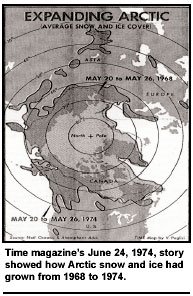
The Fire and Ice Report from the Business and Media Institute shows how so-called experts have been predicting dire climate changes for over 100 years. The problem is that they haven't been able to decide if it's getting hotter or colder. According to the report, in the 1890's the world was getting colder. In the 1970's there was another Ice Age coming, and we were all doomed. In the 1980's there was a major comeback for global warming, and it's been the undisputed champion of climate change theories since.
There is a lot of junk science out there, and it seems that every "expert" has a dog in the hunt -- grant money, political power, prestige -- so that it's impossible to trust anyone's opinion completely. Al Gore has based almost his entire political career on environmental issues, most recently in his documentary, "An Inconvenient Truth."
JunkScience.com is a website that goes into detail about some of the fallacies regarding science, global warming theories in particular. For a skeptic like myself, it's a great source of information on various aspect of the popular media's coverage of scientific issues.
Lest anyone think I want dirty water and air pollution, I am against both of those. I also think that it's prudent to conserve resources whenever and wherever possible. In fact, my "dream home" will -- if all goes according to plan -- be almost entirely off the grid. I have a few years before I actually have to pull the trigger on it, but I'm already looking at solar alternatives, and other ways to be more self-sufficient. We are stewards of our world, and need to do what we can when we can.
That does not mean the government needs to do anything. It's each person's individual choice, and as an individual I want to be a good steward.
But it's not because of Al Gore.
Thursday, June 01, 2006
Ghost Hunters
I don't watch a lot of television, but I've certainly got hooked on Ghost Hunters on the Sci-Fi network. TAPS (The Atlantic Paranormal Society) investigates claims of paranormal activity in private homes and public buildings. Roto-Rooter plumbers by day, ghosthunters by night, Jason Hawes and Grant Wilson are two of the best personalities on TV.
By the way, this is a reality show, not a sitcom. TAPS actually exists, and Jason and Grant are real guys. And they come across as two of the nicest guys you'd ever hope to meet. Have you ever had to comfort someone when they found out that their house wasn't haunted?
While not a big believer in the paranormal, I still find it fascinating to see some of the things these guys capture on video. Watch their show or visit the TAPS website.
By the way, this is a reality show, not a sitcom. TAPS actually exists, and Jason and Grant are real guys. And they come across as two of the nicest guys you'd ever hope to meet. Have you ever had to comfort someone when they found out that their house wasn't haunted?
While not a big believer in the paranormal, I still find it fascinating to see some of the things these guys capture on video. Watch their show or visit the TAPS website.
Recent Reading List
I've been busy with both research and reading for pleasure. Here are some of the books I've been into lately.
Lend Me Your Ears: Great Speeches in History by William Safire. Amazing how many situations that we're dealing with now have been discussed in the past.
The Big Book of Noir edited by Ed Gorman, Lee Server and Martin H. Greenberg. Part of the research for my novel. A collection of articles on noir films, stories, radio and television. One of the best noir writers, Charles Williams, was from San Angelo, Texas. Go figure.
How To Talk To a Liberal (If You Must) by Ann Coulter. A humorous, sharp-tongued collection of her columns.
The Devil's Dictionary by Ambrose Bierce. Not what my 13-year-old daughter thought it was. Bierce was H.L Mencken before Mencken was.
The Abs Diet by David Zinczenko. Because I recently turned 48 years old, and hope springs eternal.
Life Matters by Roger and Rebecca Merrill. Trying to get a handle on life. I mainly bought this because The 7 Habits of Highly Effective People by Stephen Covey rocked my world, and I thought this would add to that.
How to Read a Book by Mortimer Adler and Charles Van Doren. An odd choice maybe, but my reading habits have gotten sloppier as I get older, and this book is a big help in being a better reader. A key passage: "It is true enough that many people read some things too slowly, and that they ought to read them faster. But many people also read some things too fast, and they ought to read those things more slowly. A good speed reading course should therefore teach you to read at many different speeds, not just one speed that is faster than anything you can manage now. It should enable you to vary your rate of reading in accordance with the nature and complexity of the material." True dat, as my kids say.
No Country for Old Men by Cormac McCarthy. Because of the type of story I'm writing, I googled the term "Texas noir" and this book came up. This story set in west Texas by an award-winning author will break your heart. Read it at your own risk.
The Da Vinci Code by Dan Brown. I first read this book a couple of years ago, and didn't think much of it. It's as though a puzzle geek put all these different puzzles and codes into a sub-par short story. Now that it's sold a zillion copies and been made into a bad movie, I read it again, and my opinion hasn't changed. A travelogue through Christian symbolism and conspiracy theories.
The Western Guide to Feng Shui by Terah Kathryn Collins. If you don't know a bagua map from a cheese log, then this book is for you. Forget any mumbo-jumbo you might have heard about feng shui; this book gives practical guidelines like: 1) Live with what you love. 2) Put safety and comfort first. 3) Simplify and organize. I read this book while working on the design for the dream home Kathy and I hope to build when we turn 60.
Stein on Writing by Sol Stein. Because I'm a compulsive buyer and reader of books on writing. This book has a lot of good stuff, but one page is marked because of this passage: "When I ask a group of professional writers to state the essential difference between nonfictionand fiction, most are unable to do so.... Let us state the difference in the simplest way. Nonfiction conveys information. Fiction evokes emotion." Strunk and White couldn't have said it better.
Speaker's Sourcebook II by Glenn Van Ekeren. Because I had a presentation to do, and needed a quick quote about risk. (The quote I chose: "You've got to go out on a limb sometimes, because that's where the fruit is." - Will Rogers)
Lend Me Your Ears: Great Speeches in History by William Safire. Amazing how many situations that we're dealing with now have been discussed in the past.
The Big Book of Noir edited by Ed Gorman, Lee Server and Martin H. Greenberg. Part of the research for my novel. A collection of articles on noir films, stories, radio and television. One of the best noir writers, Charles Williams, was from San Angelo, Texas. Go figure.
How To Talk To a Liberal (If You Must) by Ann Coulter. A humorous, sharp-tongued collection of her columns.
The Devil's Dictionary by Ambrose Bierce. Not what my 13-year-old daughter thought it was. Bierce was H.L Mencken before Mencken was.
The Abs Diet by David Zinczenko. Because I recently turned 48 years old, and hope springs eternal.
Life Matters by Roger and Rebecca Merrill. Trying to get a handle on life. I mainly bought this because The 7 Habits of Highly Effective People by Stephen Covey rocked my world, and I thought this would add to that.
How to Read a Book by Mortimer Adler and Charles Van Doren. An odd choice maybe, but my reading habits have gotten sloppier as I get older, and this book is a big help in being a better reader. A key passage: "It is true enough that many people read some things too slowly, and that they ought to read them faster. But many people also read some things too fast, and they ought to read those things more slowly. A good speed reading course should therefore teach you to read at many different speeds, not just one speed that is faster than anything you can manage now. It should enable you to vary your rate of reading in accordance with the nature and complexity of the material." True dat, as my kids say.
No Country for Old Men by Cormac McCarthy. Because of the type of story I'm writing, I googled the term "Texas noir" and this book came up. This story set in west Texas by an award-winning author will break your heart. Read it at your own risk.
The Da Vinci Code by Dan Brown. I first read this book a couple of years ago, and didn't think much of it. It's as though a puzzle geek put all these different puzzles and codes into a sub-par short story. Now that it's sold a zillion copies and been made into a bad movie, I read it again, and my opinion hasn't changed. A travelogue through Christian symbolism and conspiracy theories.
The Western Guide to Feng Shui by Terah Kathryn Collins. If you don't know a bagua map from a cheese log, then this book is for you. Forget any mumbo-jumbo you might have heard about feng shui; this book gives practical guidelines like: 1) Live with what you love. 2) Put safety and comfort first. 3) Simplify and organize. I read this book while working on the design for the dream home Kathy and I hope to build when we turn 60.
Stein on Writing by Sol Stein. Because I'm a compulsive buyer and reader of books on writing. This book has a lot of good stuff, but one page is marked because of this passage: "When I ask a group of professional writers to state the essential difference between nonfictionand fiction, most are unable to do so.... Let us state the difference in the simplest way. Nonfiction conveys information. Fiction evokes emotion." Strunk and White couldn't have said it better.
Speaker's Sourcebook II by Glenn Van Ekeren. Because I had a presentation to do, and needed a quick quote about risk. (The quote I chose: "You've got to go out on a limb sometimes, because that's where the fruit is." - Will Rogers)
Tuesday, May 30, 2006
Laws, Shmaws
The latest uproar over the illegal immigration/border security issues causes many people to become hot under the collar. Although there is a lot to discuss on the issue, I want to address only one point.
The comprehensive bill passed by the US Senate provides a path to citizenship for immigrants in the country illegally. Five years residence, paying $3,200 in fines, etc. etc. Blah, blah blah.
What do we do with those who don't follow the path?
I don't pretend to have an answer. It's a complex question, where we need to show compassion along with some reasonable expectations. That debate could go on a long time.
If the new law passes, many illegal immigrants will participate in the process. I predict, however, that most will not. They have been used to living outside the system, and there is no real motivation to change their way of life.
So in a few years, when we have millions more illegal immigrants, we'll be having this same debate again. There will be protests, nasty epithets hurled, and the government will once again announce that it has to "do" something.
Enforcement and consequences need to be addressed now. Putting off the discussion because it's uncomfortable is not an option. The problem will only get worse. Now is the time for someone with an ingenious solution to step up. Otherwise, we will have the beginnings of a war -- not a civil war, but a gang war, with those on the outside of the law having the advantage of sheer numbers, and the willingness to go outside the rules.
The comprehensive bill passed by the US Senate provides a path to citizenship for immigrants in the country illegally. Five years residence, paying $3,200 in fines, etc. etc. Blah, blah blah.
What do we do with those who don't follow the path?
I don't pretend to have an answer. It's a complex question, where we need to show compassion along with some reasonable expectations. That debate could go on a long time.
If the new law passes, many illegal immigrants will participate in the process. I predict, however, that most will not. They have been used to living outside the system, and there is no real motivation to change their way of life.
So in a few years, when we have millions more illegal immigrants, we'll be having this same debate again. There will be protests, nasty epithets hurled, and the government will once again announce that it has to "do" something.
Enforcement and consequences need to be addressed now. Putting off the discussion because it's uncomfortable is not an option. The problem will only get worse. Now is the time for someone with an ingenious solution to step up. Otherwise, we will have the beginnings of a war -- not a civil war, but a gang war, with those on the outside of the law having the advantage of sheer numbers, and the willingness to go outside the rules.
Saturday, November 26, 2005
EPL, Lagniappe
For many members of an entire generation, the only time they felt significant was during the protests of the 1960s and early 1970s. These Baby Boomers have felt empty with their lives ever since, and have tried to rekindle that feeling (there’s that word again) by participating in protest movements such as environmentalism or animal rights or whatever the cause of the week is.
Unfortunately, these Boomers often sought to avoid real-world involvement by becoming journalists, college professors or show business performers. Now they have a new cause with the war on terrorism, and they are using their positions to protest again. Journalists “do what they feel is right” instead of simply reporting the news. (While I have no problem with someone using his or her skills or position to argue a point, label it as “commentary,” not as “news.” Google Dan Rather and Memogate.) College professors degrade and fail students who disagree with them politically. Musicians and actors – who have no other qualifications other than name-recognition – are trotted out to speak authoritatively on topics they know little or nothing about. (Google Meryl Streep and alar.) This creates enormous pressure on those who deal with them to go along, simply to survive.
To evoke the same feelings of significance they had as teenagers, these Liberal argue bitterly about something that they’re on the wrong side of history of. If the effects on the American public were not so broad and powerful, it would be pitiful, sort of like Uncle Rico in Napoleon Dynamite, who wistfully wishes he could go back to 1982 and win the big game.
Unfortunately, these Boomers often sought to avoid real-world involvement by becoming journalists, college professors or show business performers. Now they have a new cause with the war on terrorism, and they are using their positions to protest again. Journalists “do what they feel is right” instead of simply reporting the news. (While I have no problem with someone using his or her skills or position to argue a point, label it as “commentary,” not as “news.” Google Dan Rather and Memogate.) College professors degrade and fail students who disagree with them politically. Musicians and actors – who have no other qualifications other than name-recognition – are trotted out to speak authoritatively on topics they know little or nothing about. (Google Meryl Streep and alar.) This creates enormous pressure on those who deal with them to go along, simply to survive.
To evoke the same feelings of significance they had as teenagers, these Liberal argue bitterly about something that they’re on the wrong side of history of. If the effects on the American public were not so broad and powerful, it would be pitiful, sort of like Uncle Rico in Napoleon Dynamite, who wistfully wishes he could go back to 1982 and win the big game.
Ethos, Pathos, Logos
Recently a lady who I like and respect made the comment the she did not understand how anyone could be a conservative. She was speaking of my political persuasion, and those of some of my friends. It made me think about the political argument that is raging these days, and the nature of the two sides, liberal and conservative.
Listening to the extremes as I do on radio and on television, and reading the political news stories, I get a sense that we as political debaters are motivated by different forces. Liberals seem to be motivated by pathos, or feelings, and Conservatives seem to be motivated by logos, or logic.
This is demonstrated by the arguments put forth by the two sides. Liberals use words like “unjust” or “fair.” (“We should each pay our fair share of taxes.”) Conservatives tend to argue using historical precedents, facts and figures. (“The top 50% of taxpayers pay 96.54% of all income taxes”) While these arguments are made most vigorously when dealing with extreme cases such as the war in Iraq, they are used in various degrees when discussing abortion, gay marriage, and the role of Christianity in American society.
This difference in starting points is the reason the most extreme – read “loudest” – arguments get nowhere in actually persuading the opponents. In fact, it becomes ever more clear that their objective is not to persuade opponents, but to influence the public discussion.
There is a huge problem with this. Aristotle indicated that the best way to persuade is to use not only pathos and logos, but also ethos, or credibility. Those who start with a completely different base of beliefs have no credibility with their opponents. And while Liberals have tried to claim that they are “open-minded” or “fair,” the public debate has become two non-intersecting loops, with neither side really addressing what the other is concerned about.
One problem with the Liberal point is that they ignore history. This is not because they are stupid or ignorant, but because they can not get the pathos, or feeling of historical times. They are therefore left with only what they have experienced in their own lives.
Santayana’s oft-quoted remark about those who are ignorant of history may be glib, but brings up these questions: What did American citizens feel when they saw what Hitler was doing in Europe? How did they feel when the Japanese bombed Pearl Harbor? How did families feel with the deaths of thousands of their fathers, sons and brothers in the D-Day invasion?
Liberals can not answer these questions, because to do so would evoke the question that is even more important: What did these Americans do?
This is inconvenient for Liberals; because the “greatest generation” went on to do what had to be done. Americans defeated Hitler, defeated Japan, defeated Mussolini and all their followers.
Specifically when discussing the Iraq war, – either one, take your pick – and the battle against Islamic terrorists, the underlying assumption of Liberals seems to be “If we only understood each other better, we could end the violence.”
Conservatives have the underlying assumption of “We do understand them. They want to kill us and remove our way of life from the planet.” The president of Iran bluntly said as much in a recent speech when discussing Israel.
John Lennon sang “All we are saying is give peace a chance.” I would say that peace was given a chance, and the Islamic terrorists pretty much put the kibosh on that on September 11, 2001.
Although the United States has traditionally been an ally of Israel -- its proponent and protector whenever necessary -- America has been a leading instrument of peace between Israel and the Muslim world – do we remember Menahem Begin and Anwar Sadat shaking hands on American soil? Liberals seem to forget such things. Do we remember that Anwar Sadat was assassinated by his own people for trying to achieve peace? Liberals seem to forget that, also.
At the Olympic Games in Munich in 1972 Palestinian terrorists killed Israeli athletes during the one showcase that tried to prove we could put aside our differences and coexist peacefully.
History has shown that Islamic terrorists are not interested in peace. They are interested only in eradicating first Israel, and then America. Liberals are determined to ignore such inconvenient facts. Their historical starting point they is the Vietnam War. Therefore it's the only example they cite in their arguments. (If you don't believe this, Google "Iraq, Vietnam.") Unfortunately, Liberals also selectively choose what current events are important to their argument, like a stone skipping across the surface of a pond. Camp David and Munich are just words on a map to them.
While I sincerely believe that we should “give peace a chance,” I wonder: On that December evening in 198o, if John Lennon had seen the gun that Mark David Chapman held…. what would John have done? Give peace a chance, or defend himself?
As for my friend who can’t understand how anyone could be a Conservative, I offer this ubiquitous quote: “Anyone who is not a Liberal as a youngster has no heart; anyone who is not a Conservative as an adult has no brains.”
I guess I just don't understand how anyone could be a Liberal.
Listening to the extremes as I do on radio and on television, and reading the political news stories, I get a sense that we as political debaters are motivated by different forces. Liberals seem to be motivated by pathos, or feelings, and Conservatives seem to be motivated by logos, or logic.
This is demonstrated by the arguments put forth by the two sides. Liberals use words like “unjust” or “fair.” (“We should each pay our fair share of taxes.”) Conservatives tend to argue using historical precedents, facts and figures. (“The top 50% of taxpayers pay 96.54% of all income taxes”) While these arguments are made most vigorously when dealing with extreme cases such as the war in Iraq, they are used in various degrees when discussing abortion, gay marriage, and the role of Christianity in American society.
This difference in starting points is the reason the most extreme – read “loudest” – arguments get nowhere in actually persuading the opponents. In fact, it becomes ever more clear that their objective is not to persuade opponents, but to influence the public discussion.
There is a huge problem with this. Aristotle indicated that the best way to persuade is to use not only pathos and logos, but also ethos, or credibility. Those who start with a completely different base of beliefs have no credibility with their opponents. And while Liberals have tried to claim that they are “open-minded” or “fair,” the public debate has become two non-intersecting loops, with neither side really addressing what the other is concerned about.
One problem with the Liberal point is that they ignore history. This is not because they are stupid or ignorant, but because they can not get the pathos, or feeling of historical times. They are therefore left with only what they have experienced in their own lives.
Santayana’s oft-quoted remark about those who are ignorant of history may be glib, but brings up these questions: What did American citizens feel when they saw what Hitler was doing in Europe? How did they feel when the Japanese bombed Pearl Harbor? How did families feel with the deaths of thousands of their fathers, sons and brothers in the D-Day invasion?
Liberals can not answer these questions, because to do so would evoke the question that is even more important: What did these Americans do?
This is inconvenient for Liberals; because the “greatest generation” went on to do what had to be done. Americans defeated Hitler, defeated Japan, defeated Mussolini and all their followers.
Specifically when discussing the Iraq war, – either one, take your pick – and the battle against Islamic terrorists, the underlying assumption of Liberals seems to be “If we only understood each other better, we could end the violence.”
Conservatives have the underlying assumption of “We do understand them. They want to kill us and remove our way of life from the planet.” The president of Iran bluntly said as much in a recent speech when discussing Israel.
John Lennon sang “All we are saying is give peace a chance.” I would say that peace was given a chance, and the Islamic terrorists pretty much put the kibosh on that on September 11, 2001.
Although the United States has traditionally been an ally of Israel -- its proponent and protector whenever necessary -- America has been a leading instrument of peace between Israel and the Muslim world – do we remember Menahem Begin and Anwar Sadat shaking hands on American soil? Liberals seem to forget such things. Do we remember that Anwar Sadat was assassinated by his own people for trying to achieve peace? Liberals seem to forget that, also.
At the Olympic Games in Munich in 1972 Palestinian terrorists killed Israeli athletes during the one showcase that tried to prove we could put aside our differences and coexist peacefully.
History has shown that Islamic terrorists are not interested in peace. They are interested only in eradicating first Israel, and then America. Liberals are determined to ignore such inconvenient facts. Their historical starting point they is the Vietnam War. Therefore it's the only example they cite in their arguments. (If you don't believe this, Google "Iraq, Vietnam.") Unfortunately, Liberals also selectively choose what current events are important to their argument, like a stone skipping across the surface of a pond. Camp David and Munich are just words on a map to them.
While I sincerely believe that we should “give peace a chance,” I wonder: On that December evening in 198o, if John Lennon had seen the gun that Mark David Chapman held…. what would John have done? Give peace a chance, or defend himself?
As for my friend who can’t understand how anyone could be a Conservative, I offer this ubiquitous quote: “Anyone who is not a Liberal as a youngster has no heart; anyone who is not a Conservative as an adult has no brains.”
I guess I just don't understand how anyone could be a Liberal.
Saturday, September 03, 2005
Fish, Blame and the American Character
On the way to work today, I was listening to National Public Radio and its coverage of the New Orleans situation. They were conducting their typical anti-Bush harangue, this time in the form of Daniel Schorr’s commentary. Among the things he said, one stood out: “The federal government is ultimately responsible for its citizens.”
This, in a nutshell, is the dividing line between capital-L Liberals and capital-C Conservatives. Liberals believe that the highest level of government possible should handle a situation – thus their infatuation with the United Nations and the wish that the UN dictate policy to the United States government. Conservatives, on the other hand, believe that situations and problems should be solved at the lowest level possible.
Some things the federal government does very well – national security, the interstate highway system, the electrification of rural America in the 1930s – but most it does not. One thing that it does not do well is to micromanage experts or local leaders on events in their areas of expertise or familiarity. This includes natural disasters.
Daniel Schorr blamed President Bush’s administration for failing to do more before and after Hurricane Katrina hit. He cited FEMA’s 2001 study which indicated the three most likely disaster scenarios as 1) Terrorist attacks in New York City; 2) A major earthquake in San Francisco; and 3) A major hurricane hitting New Orleans.
The question regarding allocation of resources is this: How many billions of dollars should the federal government commit to protecting against something which, up to this week, had never happened? Especially when the locals themselves are not interested in contributing to that protection.
Prior to Katrina, there were suggestions on how to lessen the blow of a major hurricane. More marshland between New Orleans and the Gulf of Mexico would reduce the storm surge, thereby lessening the damage. Exactly such steps were taken in Florida, which received $4 billion in federal aid to restore the Florida Everglades. To receive the aid, Florida had to match the federal funding dollar for dollar. In Louisiana, they were only willing to match 15 or 25 cents. "Our state still looks for a 100 percent federal bailout, but that's just not going to happen," said University of New Orleans geologist Shea Penland, a delta expert.
To the extent that any preparation could have lessened the damage from Hurricane Katrina, that preparation should have started decades ago – and that preparation should have started at the grassroots level in Louisiana, not with the politicians in Washington.
The old proverb says, “Give a man a fish, and you feed him for a day. Teach him how to fish and you feed him for a lifetime.” The Liberal corollary to that is, “Give a man a fish, and he has to keep coming back to you for more fish.”
By keeping citizens dependent on government, Liberal politicians have stolen self-reliance, determination, ambition and fortitude from the American character. By cultivating a society of the needy, they have sown the seeds of decay and corruption that destroyed Rome.
UPDATE: 9/7/05
From the July 24, 2005 New Orleans Times-Picayune:
http://www.nola.com/search/index.ssf?/base/news-10/1122184560198030.xml?nola
"In Storm, N.O. Wants No One Left Behind," by Bruce Nolan
City, state and federal emergency officials are preparing to give the poorest of New Orleans' poor a historically blunt message: In the event of a major hurricane, you're on your own.
In scripted appearances being recorded now, officials such as Mayor Ray Nagin, local Red Cross Executive Director Kay Wilkins and City Council President Oliver Thomas drive home the word that the city does not have the resources to move out of harm's way an estimated 134,000 people without transportation.
In the video, made by the anti-poverty agency Total Community Action, they urge those people to make arrangements now by finding their own ways to leave the city in the event of an evacuation.
"You're responsible for your safety, and you should be responsible for the person next to you," Wilkins said in an interview. "If you have some room to get that person out of town, the Red Cross will have a space for that person outside the area. We can help you.
"But we don't have the transportation."
This, in a nutshell, is the dividing line between capital-L Liberals and capital-C Conservatives. Liberals believe that the highest level of government possible should handle a situation – thus their infatuation with the United Nations and the wish that the UN dictate policy to the United States government. Conservatives, on the other hand, believe that situations and problems should be solved at the lowest level possible.
Some things the federal government does very well – national security, the interstate highway system, the electrification of rural America in the 1930s – but most it does not. One thing that it does not do well is to micromanage experts or local leaders on events in their areas of expertise or familiarity. This includes natural disasters.
Daniel Schorr blamed President Bush’s administration for failing to do more before and after Hurricane Katrina hit. He cited FEMA’s 2001 study which indicated the three most likely disaster scenarios as 1) Terrorist attacks in New York City; 2) A major earthquake in San Francisco; and 3) A major hurricane hitting New Orleans.
The question regarding allocation of resources is this: How many billions of dollars should the federal government commit to protecting against something which, up to this week, had never happened? Especially when the locals themselves are not interested in contributing to that protection.
Prior to Katrina, there were suggestions on how to lessen the blow of a major hurricane. More marshland between New Orleans and the Gulf of Mexico would reduce the storm surge, thereby lessening the damage. Exactly such steps were taken in Florida, which received $4 billion in federal aid to restore the Florida Everglades. To receive the aid, Florida had to match the federal funding dollar for dollar. In Louisiana, they were only willing to match 15 or 25 cents. "Our state still looks for a 100 percent federal bailout, but that's just not going to happen," said University of New Orleans geologist Shea Penland, a delta expert.
To the extent that any preparation could have lessened the damage from Hurricane Katrina, that preparation should have started decades ago – and that preparation should have started at the grassroots level in Louisiana, not with the politicians in Washington.
The old proverb says, “Give a man a fish, and you feed him for a day. Teach him how to fish and you feed him for a lifetime.” The Liberal corollary to that is, “Give a man a fish, and he has to keep coming back to you for more fish.”
By keeping citizens dependent on government, Liberal politicians have stolen self-reliance, determination, ambition and fortitude from the American character. By cultivating a society of the needy, they have sown the seeds of decay and corruption that destroyed Rome.
UPDATE: 9/7/05
From the July 24, 2005 New Orleans Times-Picayune:
http://www.nola.com/search/index.ssf?/base/news-10/1122184560198030.xml?nola
"In Storm, N.O. Wants No One Left Behind," by Bruce Nolan
City, state and federal emergency officials are preparing to give the poorest of New Orleans' poor a historically blunt message: In the event of a major hurricane, you're on your own.
In scripted appearances being recorded now, officials such as Mayor Ray Nagin, local Red Cross Executive Director Kay Wilkins and City Council President Oliver Thomas drive home the word that the city does not have the resources to move out of harm's way an estimated 134,000 people without transportation.
In the video, made by the anti-poverty agency Total Community Action, they urge those people to make arrangements now by finding their own ways to leave the city in the event of an evacuation.
"You're responsible for your safety, and you should be responsible for the person next to you," Wilkins said in an interview. "If you have some room to get that person out of town, the Red Cross will have a space for that person outside the area. We can help you.
"But we don't have the transportation."
Subscribe to:
Posts (Atom)